The Seam Is More Than a Join
The cricket ball seam joins the leather cover and gives bowlers a grip reference. Learn how its position and wear can shape flight and pitch movement.
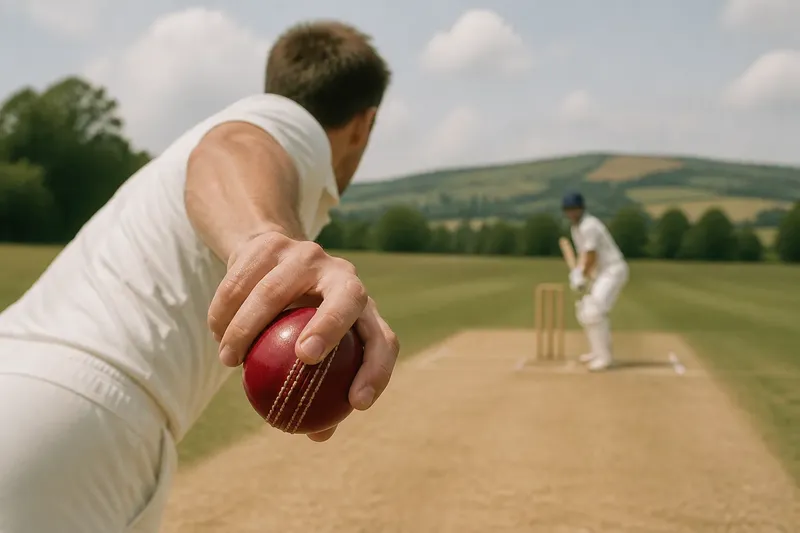
The cricket ball seam gives a bowler a tactile guide as well as holding the leather cover together. Its position and condition can influence grip, swing, and movement after pitching, but they do not dictate a single result.
Two halves, one ball
A traditional cricket ball has a hard central core, commonly made from cork and other materials, wrapped in layers of tightly wound material. A leather cover surrounds that core. Its pieces meet along a seam, where rows of thread hold the cover together and create the raised ridge visible on the finished ball.
The seam is more substantial than a decorative stitch. It helps secure the cover, and its raised profile gives a bowler something distinct to feel with the fingers. On many balls, stitching runs around the ball in two curved rows, with a central ridge between them. Construction can vary by maker and ball type.
Red and white balls share the basic idea of a stitched cover, but their finishes and use differ. A colored coating, surface treatment, or manufacturing choice may affect how the cover wears. The seam remains visible, though its prominence and feel can change as the ball is handled and used.
Grip and release
A bowler can place the index and middle fingers on either side of the seam, with the thumb supporting the ball underneath. That arrangement gives the fingers a reference point and can help the bowler release the ball at a chosen orientation. Other grips place fingers along the seam or use it as a guide rather than a rigid track.
At release, the seam may be presented upright, tilted, or allowed to rotate. A bowler seeking conventional swing generally tries to keep the seam in a useful orientation while the ball travels, though grip and wrist position vary. A bowler seeking movement after pitching may instead aim for a stable, upright seam that can meet the surface at an angle.
These are intentions, not contracts. A change in wrist position, finger pressure, or release timing can alter the seam’s angle or the ball’s rotation. The batter may also read the grip or release and adjust. The raised seam offers a tactile guide; it cannot prevent the hand from doing something else.
Air and surface
In flight, an angled seam can affect airflow around the ball. Along with the cover’s condition and the ball’s movement, its orientation may contribute to swing. The seam is not a switch that turns swing on. An upright seam held steadily may support a bowler’s plan, while a wobbling or rotating seam can make the ball’s behavior less predictable.
After pitching, the seam may meet the surface before the smoother leather does. If it catches or grips, the ball can change direction from its previous path. The amount of movement depends on the pitch, the seam’s angle, the ball’s pace and rotation, and the condition of the ball. A seam landing flat or skidding across the surface may produce little visible deviation.
Think of the seam as a possible point of contact, not a steering wheel. On a firm pitch, an upright seam might hold its line; on a worn or uneven patch, a similar ball might deviate. The bowler can set up the possibility, but the surface has its own vote.
What changes with use
A new ball has a relatively clear seam and an even cover. As it travels through a match, the leather can scuff, darken, or become smoother in places. The seam may flatten or fray. Those changes affect the ball’s surface and the bowler’s grip, but they do not produce a universal progression from one kind of movement to another.
Players may care for a ball within the rules of the match, including keeping it dry and polishing one side where permitted. A difference between the two sides can matter to swing, while a sound seam can remain useful for controlling orientation and seeking movement off the pitch. These effects relate to the ball’s condition, but they are not identical.
Say a bowler receives a ball with a slightly flattened seam and wants to bowl a delivery that may move off the pitch. The bowler focuses on a steady upright release rather than assuming the seam will bite. The observable aim is a consistent presentation at release; whether the ball deviates still depends on the pitch and the contact it makes.
What readers ask?
Does the seam always make the ball swing?
No. Seam orientation can contribute to swing, but the cover’s condition, the ball’s movement through the air, and the bowler’s release also matter. A visible seam does not mean the ball must curve.
Is seam movement the same as swing?
No. Swing describes movement through the air, while seam movement usually refers to a change after the ball pitches. A delivery can show one without clearly showing the other.
Why do bowlers hold the seam upright?
An upright seam gives the bowler a reference for release and may present the ridge to the pitch in a useful way. It can also help maintain a chosen orientation in flight, though keeping that orientation steady takes control.
Can a batter read the seam?
A batter may use the bowler’s grip, wrist position, and release as clues, but those clues are not a certain forecast. Similar-looking presentations can lead to different results when the release, flight, or pitch contact changes.
One ridge, several jobs
The raised seam begins as a structural feature: it joins and secures the leather cover around the ball. In a bowler’s hand it becomes a grip reference; in flight it can contribute to swing; at the pitch it can become a point of contact. Each role depends on circumstances that the seam alone cannot control.
When watching a delivery, notice the seam’s orientation and what happens after it lands. The distinction helps separate movement in the air from movement off the pitch. The cricket ball seam connects those possibilities, but it does not write the ending.