When a Cricket Ball Is Called Wide
When a cricket ball is called wide depends on the batter’s reasonable chance to play it. Learn how stance, height, contact and match conditions shape the call.
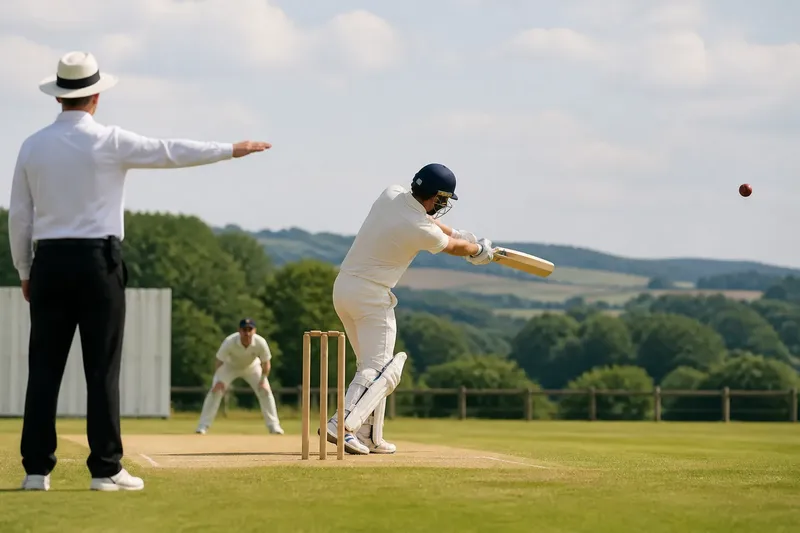
A cricket ball is called wide when it gives the batter no reasonable opportunity to play a shot, judged against the batter’s position and the rules in use. The ball need not cross a fixed line beside the stumps, and the umpire considers its path, height, batter movement and any contact.
The exact wording and playing conditions can vary by competition. Those rules settle local details, particularly how contact and balls passing outside marked lines affect the decision.
Reach and distance
The central question is whether the batter could reasonably reach the ball and play it with the bat. The umpire considers line and height in relation to the batter’s position, rather than applying one universal boundary across the pitch.
A delivery does not become wide merely because it misses the bat or passes outside the line of the stumps. A batter may leave a playable ball, just as a batter may swing and miss one that was beyond reach. The decision concerns the opportunity to play, not the outcome of an attempt.
A batter who reaches across or changes position may bring a ball within reasonable reach. The line painted on the pitch is useful context, not a complete substitute for judgment.
Ask whether the batter had a reasonable shot, not whether the ball crossed an imaginary fence.
The batter’s position
The umpire judges the delivery in relation to the batter’s position when the ball reaches them. Stance and movement matter because they change the distance between the ball and the batter. The same path through the air can look different to someone standing upright, leaning across or moving toward the off side.
A batter cannot automatically manufacture a wide by making a late, extreme movement away from the ball. The umpire considers the position adopted and whether the delivery was within reach from there. A change of stance does not automatically make a previously wide line fair.
Imagine a right-handed batter starts near leg stump, then shuffles across before a slower ball arrives outside off stump. If the batter’s new position allows a normal reach to meet it, the ball may be judged playable. If the ball remains beyond a reasonable shot, it may still be wide. The relevant observation is the available reach when the ball passes, not its label at release.
Watch the batter’s movement as well as the ball’s route.
Height and line
Reach is not only a matter of left and right. A ball passing high may also be beyond a reasonable attempt, depending on its height and the batter’s position. A low ball well outside the body can be unreachable laterally; a high one may be unreachable vertically.
Height alone does not settle the call. A batter may reach for a high ball, and a ball above the shoulder is not automatically wide in every context. Conversely, a ball within horizontal reach may be too high to play reasonably.
Some competitions use specific provisions for balls passing over the head or outside marked lines. These conditions help administer a match, but the applicable rules and the batter’s opportunity to play still matter.
For an on-field decision, consider height and line together.
Contact and the call
Bat contact generally means the delivery is not called wide, but the applicable Laws and playing conditions govern how contact is recorded and how the delivery is treated. Do not assume that any apparent contact ends every question about the call; a competition may specify how particular forms of contact affect the decision.
A missed attempt is different from contact. If the ball passes beyond reasonable reach without touching the bat, the umpire can still call it wide. Contact with the batter’s body also requires judgment: without bat contact, the umpire still considers whether the delivery was within reach, alongside any other rules affecting the ball.
Say a batter stretches for a ball outside off stump and it brushes a sleeve without touching the bat. The umpire must judge whether a reasonable shot was available, rather than treating body contact as proof that the ball was reachable. The applicable playing conditions may also affect how the delivery is recorded.
Check the competition’s rules before treating contact as decisive.
Umpire decisions?
Does a ball have to pass outside the stumps to be wide?
No. A ball may be wide because it is too high to reach reasonably, even if it does not pass outside the stumps. The test concerns the batter’s opportunity to play, subject to the rules in use.
Can a ball outside off stump be fair?
Yes. If the batter can reasonably reach it and attempt a shot, its passage outside off stump alone does not make it wide. Stance and movement help determine whether that reach was available.
Does swinging and missing prevent a wide call?
No. A missed swing is not bat contact, so the umpire still assesses the ball’s reach. The attempt may help show the batter’s position, but it does not automatically make the delivery fair.
Is every ball above the batter’s head wide?
Not automatically. The umpire applies the relevant rules and judges the batter’s position and ability to play the delivery. Competition-specific conditions may set criteria for very high balls.
Reading a wide call
When a cricket ball is called wide, the ruling turns on the batter’s reasonable chance to play it, assessed in the moment rather than from a fixed line alone. From the stands, track the ball’s path, the batter’s movement, height and contact; those details explain more than the signal by itself.